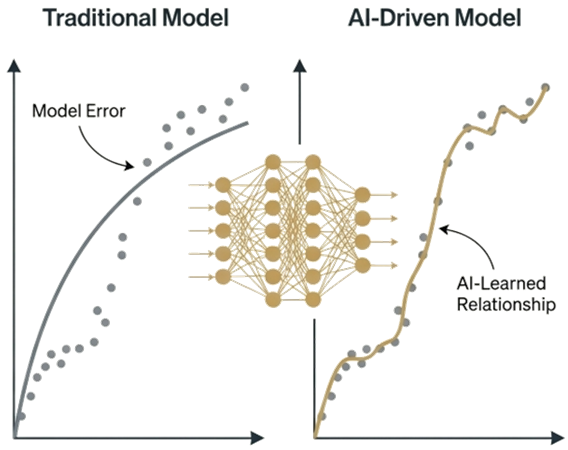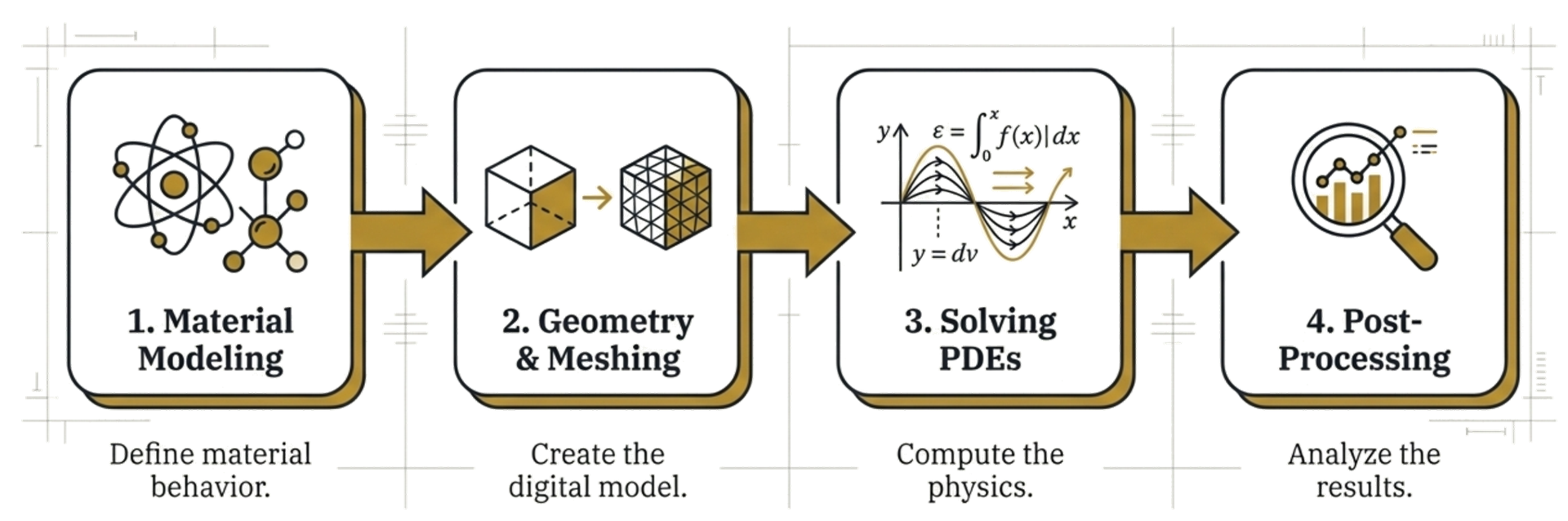
Traditional phenomenological (e.g., Johnson-Cook) and microstructural models rely on predefined mathematical functions. This introduces ‘model error’ and struggles with complex nonlinear behaviors. Obtaining parameters is expensive and time-consuming (e.g., Split Hopkinson Pressure Bar tests).
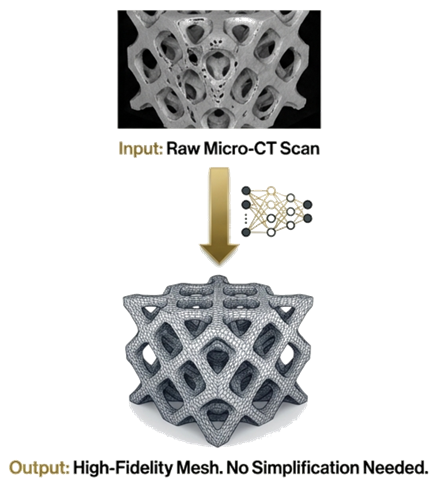
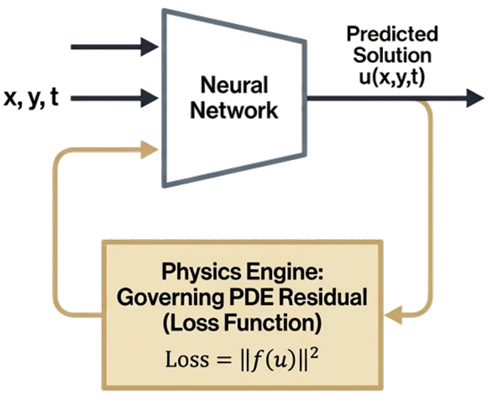
- Artificial Neural Networks (ANNs) learn constitutive relationships directly from experimental or simulation data, without needing explicit mathematical expressions (acting as a ‘black box’).
- This approach avoids errors from predefined functions, handles uneven data, and can uncover previously unknown constitutive laws.
- Example: The FE-PDNN (Finite Element-Positive Definite Deep Neural Network) system learns nonlinear relationships for composite materials and can be integrated directly into commercial software like Abaqus.