Reduced Order Model (ROM): The Efficient Engine Driving Engineering Innovation

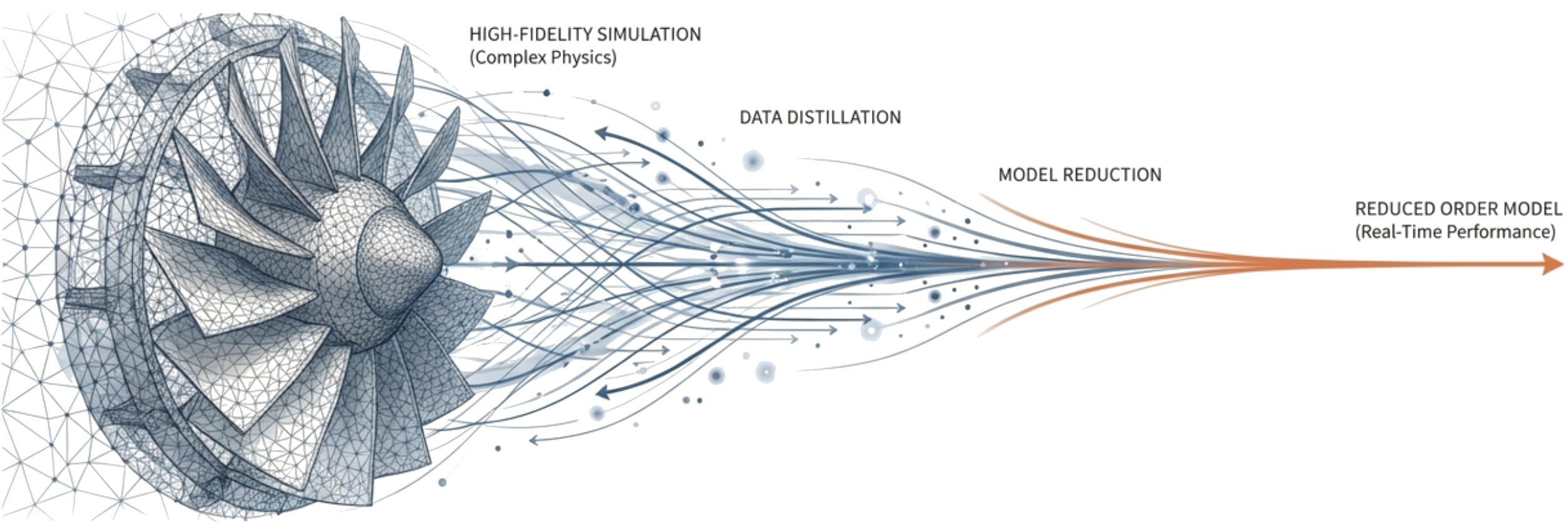
Reduced order modeling (ROM) and model order reduction (MOR) are techniques for reducing the computational complexity of a full-order, high-fidelity model while preserving the expected fidelity within a satisfactory error. Working with reduced order models (ROMs) can simplify analysis and control design.

Why Use Reduced Order Modeling?

High-fidelity third-party FEA/CAE/CFD models can take hours or even days to simulate. Performing hardware-in-the-loop testing, control design, and system-level analysis on such models can present significant computational challenges or sometimes be infeasible. Also, linearizing complex models can result in high-fidelity models containing states that do not contribute to the dynamics of interest in your application.

To address these challenges, you can replace high-fidelity component-level models with reduced order models that trade off accuracy for reduced computational complexity. The accuracy reduction is based on accuracy tolerances, frequency ranges, and other characteristics important for your application. Reduced order modeling is also useful for creating virtual sensors to estimate or predict signals of interest when measuring those signals using a physical sensor is impractical or infeasible.

You can also use reduced order modeling to create digital twins to make it more computationally efficient and suitable for periodic updates to represent the current state of the operational asset.
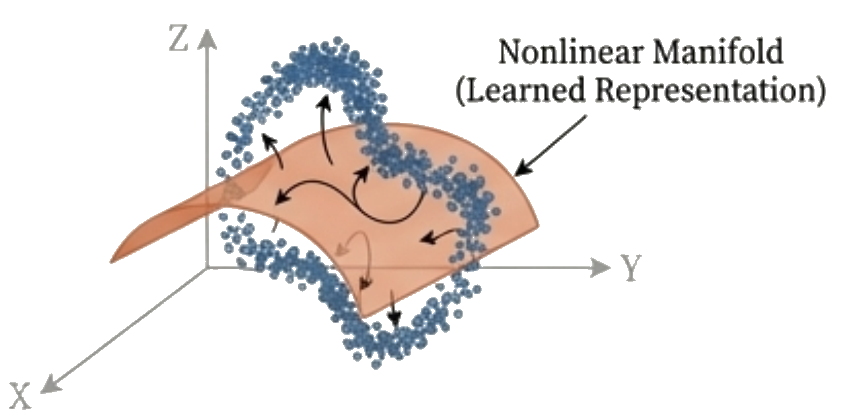
The Two Paradigms of Model Reduction: From Linear Projections to Nonlinear Manifolds

UQ methods are distinguished by their ability to handle two fundamental types of uncertainty. Understanding this distinction is key to selecting the right approach.


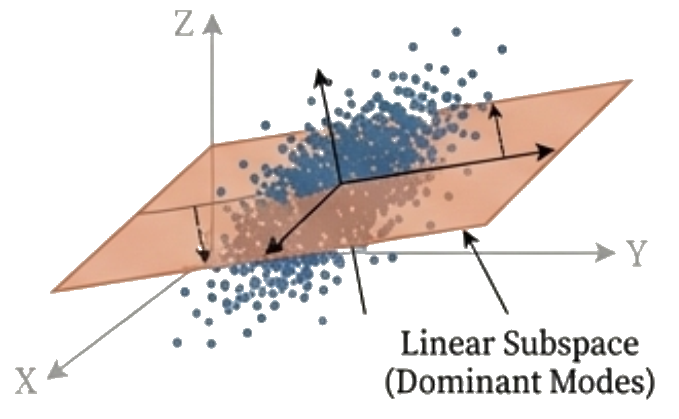
    Classic Projection-Based Methods

  • Proper Orthogonal Decomposition (POD/SVD): Extracts dominant spatial modes from simulation ‘snapshots.’ The industrial workhorse.
  • Component Mode Synthesis (Craig-Bampton): Partitions a large structure into independent components (“superelements”) for efficient analysis.


    Modern Machine Learning Methods

  • Convolutional Autoencoders (CAE): An encoder network maps the high-dimensional field to a low-dimensional latent variable; a decoder reconstructs it.
  • Transformers: Utilize self-attention to capture complex, long-range temporal dependencies in fields like fluid dynamics.

Distilling the FEM into a Control-Relevant ROM

Reduced order modeling (ROM) and model order reduction (MOR) are techniques for reducing the computational complexity of a full-order, high-fidelity model while preserving the expected fidelity within a satisfactory error. Working with reduced order models (ROMs) can simplify analysis and control design.

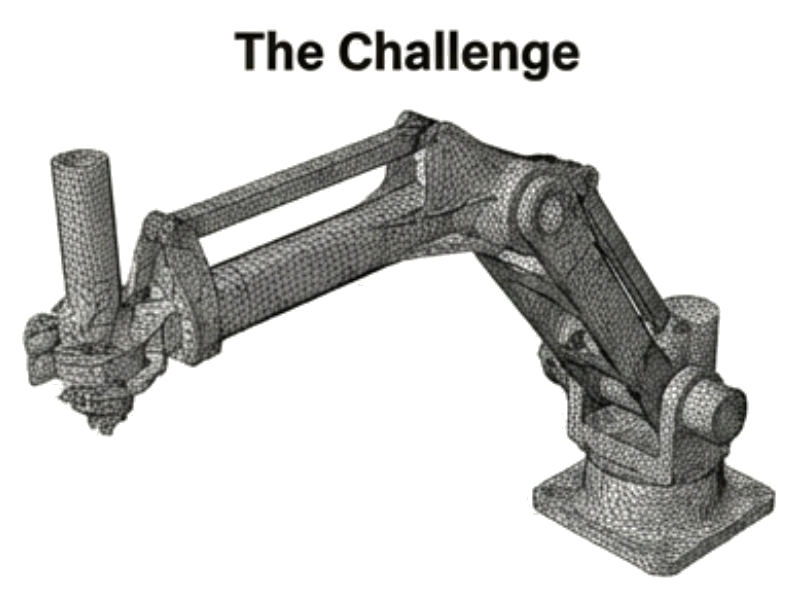
The full FEM model is computationally too expensive for the interactive process of controller synthesis.

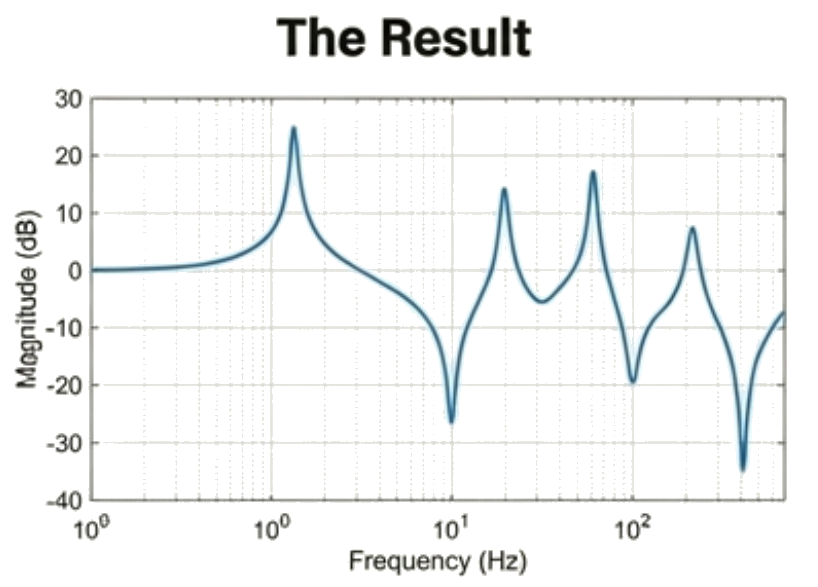
Technique: Balanced Truncation is used. This method takes both actuator inputs and sensor outputs into account to select the most critical system modes. It truncates states that are difficult to reach or observe, preserving the essential input-output dynamics.

A low-order model that accurately captures the system's Frequency Response Function (FRF) up to the target bandwidth.

Robustness Challenge

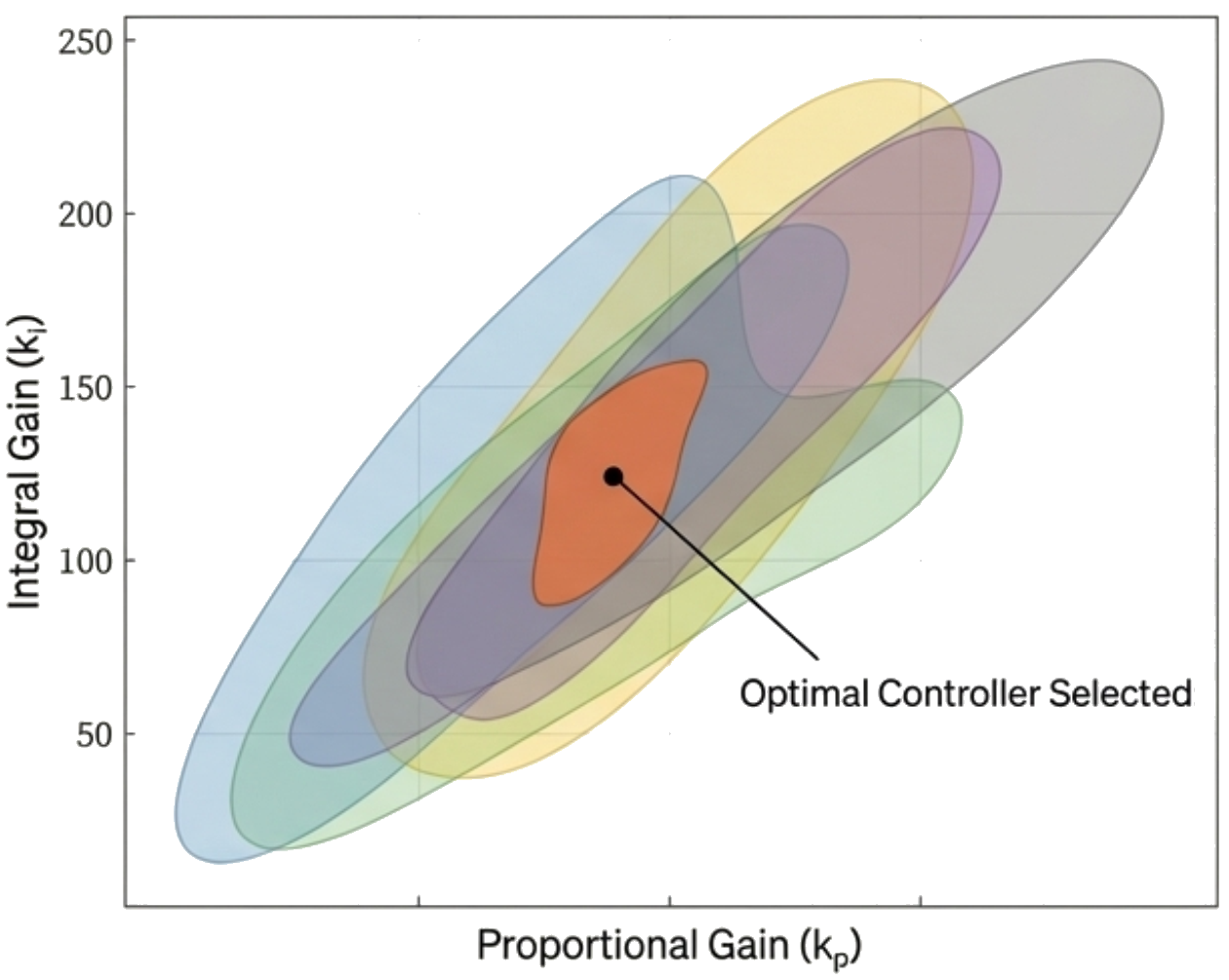
  • The Robustness Challenge: Design a single fixed-structure PI controller that guarantees stability and performance as the payload mass position varies between 280 mm and 310 mm. This uncertainty shifts the system’s resonance frequencies.
  • The Method: The H-infinity loop-shaping method is used to find the set of all possible PI controller gains kp, ki that satisfy the performance criteria (Max Sensitivity < 1.3) for all five sampled payload positions simultaneously.
  • The Outcome: An optimal, robust controller (kp = 79, ki = 128.5) is selected from the intersection of the admissible regions, ensuring consistent performance across the entire range of uncertainty.

ROM in Action: Transforming the Engineering Lifecycle

The speed and portability of ROMs are not just theoretical advantages; they are enabling entirely new workflows and unlocking value across the entire product lifecycle, from design to in-field operation.

Sampling Icon

1. Accelerate Design & Optimization

Run thousands of design configurations in the time it used to take for one. Drastically shorten product design cycles by finding optimal designs faster.

Surrogate Icon

2. Democratize Simulation

Package validated expertise into a simple model that can be shared with non-experts for real-time "what-if" analysis without needing the original HFM or solver.

Sampling Icon

3. Enable System-Level Simulation

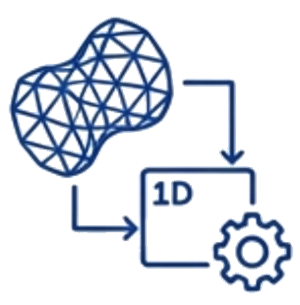
Integrate the accuracy of 3D physics into 0D/1D system models. Simulate the performance of an entire product by replacing complex components with fast-running ROMs.

Surrogate Icon

4. Power the Executable Digital Twin

Create real-time, operational digital twins of physical assets. ROMs are the core engine for virtual sensors, predictive maintenance, and operational optimization.

Transforming Industries: ROM in Action Delivers Orders-of-Magnitude Gains

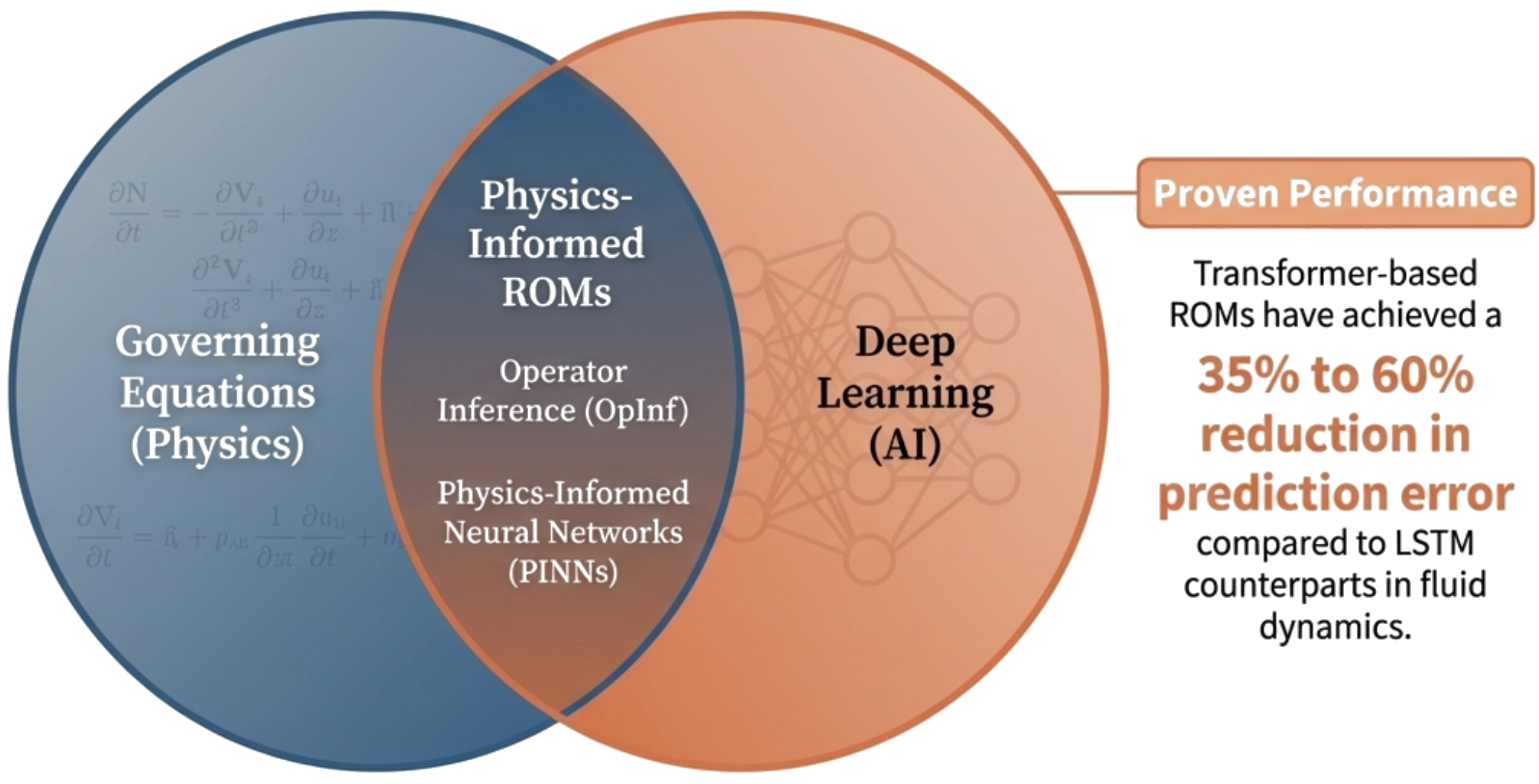
The Next Frontier: The Convergence of Physics and AI

The future is not just data-driven; it's physics-informed AI. This overcomes the limitations of pure black-box models which can produce physically inconsistent results.

  • Operator Inference (OpInf): A non-intrusive technique that learns reduced operators directly from data while preserving the physical structure of the governing equations (e.g., energy conservation).
  • Physics-Informed Neural Networks (PINNs): Incorporate PDE constraints directly into the loss function during training, ensuring the ROM remains physically consistent even with sparse data.